



Registered
Childcare Vouchers Accepted






For our Winchester venue, including day campers there.
Tech Camp was established in 2008 as an alternative to the 'sports camp' or 'multi-activity camp' model, and has quickly become a big annual event, attracting hundreds of children over the summer from around the UK and from over 20 countries worldwide. It is quite different from any other camp: the activities the children do are done nowhere else, and many are designed specifically for Tech Camp. The camp is designed to captivate every child; we have many who are 'tech enthusiasts', but also many who wouldn't call technology the love of their life – they come purely for the exciting activities we offer.
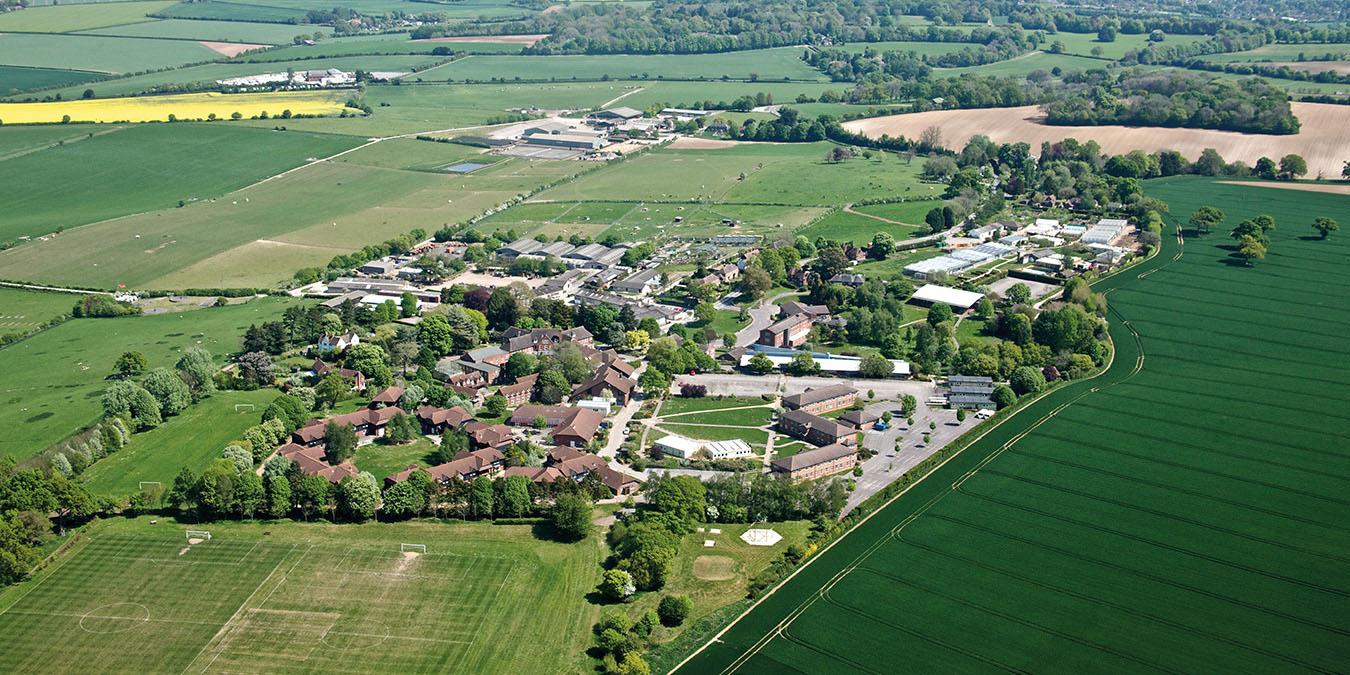
This event is for students aged 9–17, and is held over two weeks at Easter and four weeks in August at The Wessex Conference Centre, Sparsholt College, Winchester, for day or residential campers. The Wessex Centre is on the Sparsholt College site, and offers great facilities with easy access to London and the South East, in a beautiful and safe rural location.
Please check your booking emails for dates. Most camps are Monday to Friday. Residential campers always arrive a day earlier (normally on the Sunday afternoon). Sometimes in the summer a small number of campers stay for the adjoining weekends.
The address is: The Wessex Conference Centre, Sparsholt College, Winchester, Hampshire SO21 2NF. For directions, click here. There's more about the site on our Winchester venue page.
Sat navs may take you down very narrow lanes, so we strongly suggest reading the directions in the link above!
When arriving with residential campers (4:30pm–5:30pm on the day before courses start), follow the "Tech Camp" signs to park in the "Sainsbury" car park at the top of the site. There's no supermarket: the car park is named after Lord Sainsbury. From there our staff will point you to the registration desk. We'll ask you to check the information we have on your child and sign a consent form, then collect any medication and send you off to the residential area to unpack. Please feel free to go with them.
When you're done you can come back to the registration area, where we'll have a few informal activities for the students to explore. You're welcome to leave at any point until we take the campers off for group activities at around 5:30pm, although we'd recommend leaving as soon as possible, particularly with a younger, nervous or first-time camper. It may sound counter-intuitive, but children settle more quickly if you say a quick goodbye as soon as you see them starting to chat with another camper or explore one of the activities.
Shortly afterwards, the children meet the staff and other campers, and then it's straight into some fun sessions, supper, more activities and eventually bed!
When you arrive with day campers on the first day (9:00am–9:20am), follow the signs, park and register your child as described above. Again, we'd suggest leaving as soon as you can after this: we'll have several activities to keep the students busy until our welcome session at around 9:30am.
For most weeks at Winchester we offer an escorted transfer service to and from London Waterloo station, for £50 per trip. Where it is available, you can select it when you book. The exact details and timings are normally sorted out by us in the week before the event.
If you've booked it, we'll meet you mid-afternoon at Waterloo station on the day before courses start (normally Sunday) and take the campers from there. For the return trip, we'll meet you at the same place at Waterloo late in the afternoon on the last day (normally Friday) for you to collect your child. Depending on numbers, we usually buy train tickets for the campers and travel with them to and from Winchester by train and taxi. You can find the up-to-date timings and meeting point here.
For international campers travelling via a London airport, we can offer an escorted taxi service with our travel partner, Wessex Cars. To find out more, contact them on +44 (0)1962 877749 or by email through their website. They'll meet your child at the airport, and get them back in time for their return flight.
This is a private arrangement between you and Wessex Cars, so you'll pay them separately, but we've used them for a number of years and found them very reliable. Their drivers are all DBS checked (the criminal records check required for anyone working with children in the UK).
They'll quote a fixed price for a car seating up to four. Guideline prices: Heathrow £100 (around an hour), Gatwick £110 (around an hour), Luton £135, Stansted £175, London City £165, Southampton £40. There's also a fee of around £15 an hour for a fully escorted service, plus car park fees. These are normally small, but costs can quickly add up if flights are delayed.
Once you have flight times and transfers booked, please send us the details so we're ready for your child (and your child is ready for the transfers!). Registration is normally 4:30pm to 5:30pm, but campers flying in need more flexibility, so choose flights that get your child to camp between 3:00pm and 6:00pm on the first Sunday, and away from camp between 3:00pm and 6:00pm on the last day. If you need flights outside these windows, please contact us before booking. It's generally possible to arrive a little later in the evening, and to leave a little earlier or later on the last day (except on the very last day of our last week, when we're all busy packing up).
Each day the campers take part in their chosen course, working on various projects that are completed through the week. Residential campers also have an extra activity session every day after supper, with a range of technical and recreational options.
We sometimes get asked if a child can miss a day during the camp. This isn't ideal, as most courses are designed to run over the full week. If it's unavoidable we'll try our hardest to make it work, but we can't reduce the fees, and your child may not be able to take home a completed project in one or more courses. Do let us know of any unavoidable clashes, and we'll give you a heads-up on the likely impact.
At Tech Camp, campers choose what courses they study, so if it's important to your child to be with friends during course times, they'll need to register for the same courses at the same times. To give the best teaching, we usually group students by experience, so two friends might be in different small (6–8 student) 'tutor groups' in the same classroom.
Most campers sign up to do particular courses that interest them, so we recommend involving them in these decisions. They'll have a better experience on courses that interest them than on a course just because a friend is doing it. Campers make friends quickly, and there's plenty of time in breaks, mornings and afternoons to spend with friends.
We do allow group requests, though, and keep them in mind when allocating tutor groups and residential rooms whenever possible. If campers are of similar age and experience, we can almost always do this.
All Tech Camp staff are chosen for their ability to work with children and their passion for science and technology. Of course all staff go through a stringent checking process, including enhanced DBS checks, but in addition almost all of them have worked with us before, or were well known to us before starting.
The courses are usually run by an 'academic': someone who works professionally in a technology-related field, or who is a teacher or university student studying engineering or IT. A couple of key staff with great experience of working with children (often in boarding schools, or as parents themselves) take the lead in supervising the residential campers. You may like to visit the Meet the Team page for more about our staff.
| Time | What happens? |
|---|---|
| Early | Early-waking campers should stay in their rooms or lounge area until 8:20am. |
| 8:20am | Wake-up: we knock on doors. Time to get dressed and walk over to breakfast. |
| 9:00am | Day campers arrive |
| 9:30am | Courses start: two 90-minute sessions before lunch, with a 30-minute break between for snacks and games |
| 1pm–2pm | Lunch (day campers are provided with food) |
| 2:00pm | Afternoon courses: two 90-minute sessions, again with a 30-minute break between |
| 5:30pm | Courses finish |
| 5:30pm–5:45pm | Day camper pick-up (please go to the registration desk to sign them out) |
| 6:00pm–6:30pm | Supper |
| 6:45pm–9:00pm | Evening activities |
| 9:00pm–9:30pm | Over to dorms |
| 9:30pm | Shower, brush teeth, ready for bed |
Lunch and snacks are provided for all day and residential campers. Three meals a day and two snack breaks are included in the camp fees, so there's no need for pocket money for extra food or drink. You're welcome to send some, but please use your discretion: in our experience, some campers given enough money will try to replace their main meals with junk food rather than supplement them!
For campers staying over the bridge weekends in the summer, food and snacks are also included, as are any day trips. Extra pocket money is up to you; we'd suggest limiting it to perhaps £10 or so a week, as the only things children can generally buy are sugary drinks and sweets. The dining hall also accepts debit cards.
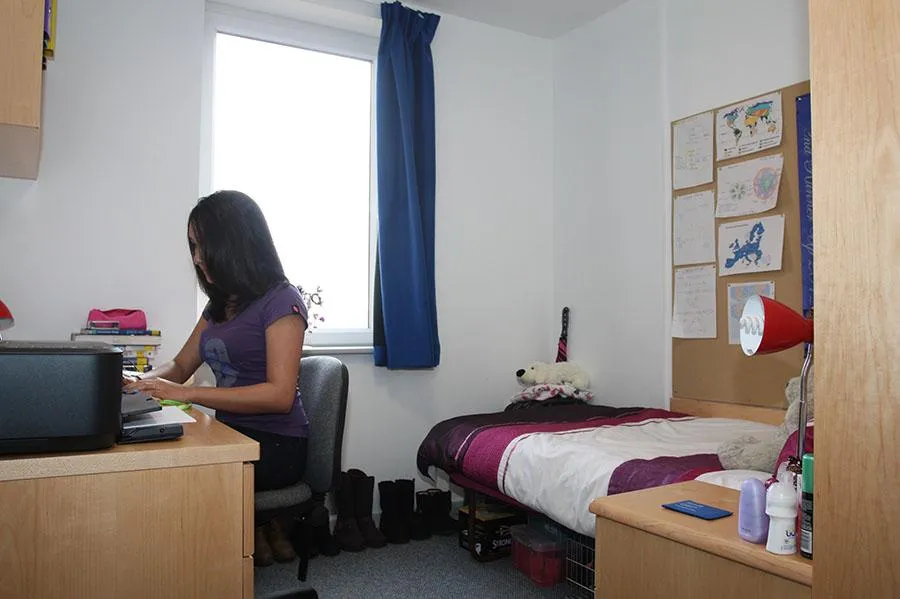
Residential campers stay in single rooms: small, simple rooms with a bed, storage for bags and personal items, an en-suite bathroom and a desk. If your child knows another camper coming to the same camp, you can ask at sign-up for adjacent rooms. If no rooming preferences are given, we'll always try to place children of a similar age together. We don't generally place siblings of different ages together, as campers make friends more quickly when placed with someone their own age.
Boys and girls are of course housed in separate rooms, and generally in separate wings of the accommodation blocks. Staff rooms are close by, and the residential staff are all experienced in working with children (and nice people to boot!). All bedding is provided for residential campers, but you can bring your own. All campers have a key to their own room.
Three times a day we run a medical session to give out medications and make sure everyone is happy and healthy! Beyond minor cuts and bruises, we'll let you know immediately if there are any problems.
At the start of camp, please hand any medications to the staff at the front desk in a sealed, named bag. Over-the-counter and prescription medication must be in its original container, in a labelled, resealable plastic bag. Please send only enough for your camper's stay.
This is a good time to mention the Tech Camp philosophy on injuries: we can't guarantee your child will come home injury-free. In fact, we can almost guarantee they'll have a cut from a knife or a burn from a soldering iron. Children can't learn unless they're given the chance to make mistakes. We don't stop a toddler trying to walk, even though we know there will be falls, bruises and tears. There's no way to teach someone to use a knife or soldering iron without a real chance they'll hurt themselves in the process. The injuries they can do, even with a soldering iron, are usually quite limited, though: despite the temperatures involved, a tool the size of a pencil can't easily do significant damage. And we strongly believe that what is being learnt far outweighs the potential danger.
This isn't to say we're cavalier about dangers; in fact the reverse is true. We carry out detailed risk assessments on all our activities, and are of course fully insured. The first thing we do with new activities is warn the children about the dangers, and the staff teaching these skills could hardly be more qualified.
It's also worth putting the risks in perspective. One of the best ways is to compare insurance premiums: ours are actually quite low for a camp, as insurers know the risks of our style of camp are much lower than, say, a sports camp. It's a bit like school trips: despite the worry teachers go through planning them, statistics show children are in fact far safer on a school trip than at home. However, if all that hasn't convinced you and you don't sign up to our philosophy, drop us a line – we'll gladly give you a refund and offer the place to someone on the waiting list!
So if your children are at Tech Camp, how do we keep the lines of communication open? We have several ways to make it easy, particularly for residential campers:
Please think carefully before calling camp after 10pm unless there's a REAL emergency (a critical medical concern or family emergency that MUST be dealt with before morning), as staff will normally be supervising the campers' bedtime routine or going to bed themselves, and the call is likely to wake one of the emergency staff on duty.
Because of all this, campers don't need mobile phones, and we don't allow them (or other internet-connected screen devices) at camp. There are many reasons for this, including:
Younger or homesickness-prone campers are also much better off without a phone. This may sound counter-intuitive, but it's based on years of experience with children at residential events like this. Homesick children with a phone tend to 'bottle it up' and then call home late at night (or in the small hours). Most parents are of course happy to be disturbed at any time if their child is unhappy, but it makes it very hard for us to help, as the first we hear of it is normally the next morning when you get through to us (and they've had a miserable night!).
Children without phones tend to come to our staff much earlier if they're unhappy (and we'll usually notice anyway), and we're much better placed to help. Homesickness almost always strikes most at night, and the best solution is for us to get them involved in activities and games with other campers. Not only does this make them feel better in the short term, but being involved, making friends and talking to staff shows them they're cared about at camp too, helps them learn to solve their own problems, encourages independence, and makes it much less likely the problem will continue on the following nights.
"They are quiet and don't want to join in with others at break time, and want to sit by themselves." Some children are like this, and we never force anyone to join in games with others. They're always welcome to bring a book or read one from our mini library, or play with some of our other equipment that doesn't necessarily involve others.
"We must be able to contact them in an emergency / they must be able to contact us if they're feeling homesick." See the notes on communication above and on homesickness below. Mobile coverage on site is also poor, and it's much more reliable to call us on our landline (or they can call you on ours).
"They can't get to sleep without listening to an audiobook or music." In our experience campers are tired at the end of the day, and this isn't usually a big issue. But if you think it will be a serious problem and you have something like a 'Yoto' player at home, we suggest sending that, or buying a very cheap modern 'iPod equivalent' and loading it with something suitable before camp.
"They are doing their Duke of Edinburgh Gold / are 17 / are well behaved and would never do anything wrong / show other children things on their phones." This may be true, but we can't have one rule for one or two campers and another for the rest. Besides, we'd suggest that a (very temporary) 'digital detox' during breaks and overnight would do any camper good (and indeed most of us adults!).
"They are travelling to and from camp by themselves, and we want them to have one for security." That's fine: we'll just ask them to hand it to us when they arrive, and we'll hand it back when they leave.
"My child has a life-saving medical device connected via their phone that must stay connected overnight." Please call us to discuss it, so we can put a plan in place that works.
For some children, Tech Camp may be their first major time away from home. It's quite normal for them (and their parents!) to be a little nervous. Nobody can guarantee homesickness won't happen, but we find it's almost never a major issue at Tech Camp, even for children who arrive feeling quite nervous.
There are several reasons for this. The most important is that the activities, including the evening activities, are designed to keep the children interested and excited. The most common time for homesickness is just before bed, and it's very hard to wish you were at home at that time of night if you've just left an exciting tech activity.
The staff supervising the residential campers either have children of their own or are highly experienced in a boarding environment (or both), and can make everyone feel at ease if an issue arises.
For parents, there are daily email updates on the previous day, with a bank of photos to browse. If you've been worried about your child, it's often a welcome relief to see photos of them happily involved in activities through the day. With the best of intentions, some children are too wrapped up in the day's activities to realise their parents like to know what's happening too.
A number of parents have used the camp to introduce their children to boarding, or just to give them some experience of staying away from home for a few nights. It makes a good introduction when the experience is so enjoyable.
Despite all this, we'll usually have a couple of children at camp who are homesick to some degree. We encourage children who feel homesick (or are unhappy about anything else) to talk to us as soon as possible, rather than immediately phoning home, and we'd ask you to encourage them to do the same. Our experienced staff can help them through problems before they get worse, and it's usually much easier for us to resolve problems on the ground than for someone miles away. We'll of course let you know straight away if we think they're really struggling, and they're still welcome to call you at any time. But in our experience, 99% of the time an emotional phone call from your child points to a momentary problem that we (or a good night's sleep!) can resolve fairly easily.
Many of us (adults included) have some degree of daily mood swings, and typically feel more positive and energetic in the mornings, and less so at the end of the day when we're tired and things slow down. We recognise that you're an experienced parent (at least by the time your child is old enough for Tech Camp!) and the best person to help your child with most of life's hiccups. With homesickness at camp, though, you'll need to trust us to solve it more easily than you can. It isn't down to any magical abilities: the solution is almost always to get them involved in something interesting going on at camp. Your child is (presumably) coming to camp because they're interested in technology, and we have lots of interesting technology to show them! See also our homesickness page.
For an additional £370, a separate "Bridging Weekend" is available on selected weeks at Easter and in the summer. It covers food, accommodation and activities from Friday night until Sunday afternoon, when the other campers join us. Activities over the weekend include gaming sessions, laser tag, a movie night, and a science museum trip or other outing.
It isn't available after the last camp. It can be used to extend the camp by two days, or to 'bridge' two weeks.
Campers staying for two full weeks can use the on-site launderette over the bridge weekend. The machines take pay cards, but we cover the cost, and campers get help from one of the assistants if they need it – a valuable life skill!
Day campers don't need anything except a water bottle: all technical supplies, food, drink and snacks are provided. For residential campers, here's a suggested list.
PLEASE make sure all valuables and clothes likely to be left around (jackets, hats etc.) are named. We know it's time-consuming to name everything, but it's worth putting a label on valuable things, and perhaps writing a surname inside things usually taken off during the day (like jackets) with an indelible pen. It's hard for us to give items back to the right child if we don't know who owns them.
On the last day of camp, sessions normally run as on any other day. The only difference is that at the end of the sessions (around 3:15pm), we invite all parents to look around and see what your child has been up to. We'd suggest arriving at the car park just after the sessions finish, where they'll be looking out for you. They can then take you to the course areas to show you what they've made and learnt. If they're particularly enthusiastic about a topic, you might like to chat with the course leaders too, who will be in the classrooms from around 3:15pm to 4:00pm.
There's no official finish time, but we'd expect most people to have left by around 4:00pm. Please do come to the registration area before you leave, though: we'd love to say goodbye in person (and of course we need to check all the children have been safely picked up!). There's no need to go back to the residential areas, as the students will bring their belongings up to one of the large classrooms in the morning (right by the car park), so you can make an easy exit.
We realise some parents will want to leave quickly, because of other commitments or to avoid traffic on a long journey, so you're welcome to leave any time after 3:00pm. Just make sure you've checked out with us first and collected any medications, phones and lost property. Campers on the Waterloo transfer travel back with us and are collected at Waterloo.
We'll keep you up to date if any information about the camps changes. Around a month before camp we'll ask for final payment by email. About a week before, we'll send another email with a few important details (we also keep this guide up to date, so it's normally just a summary of the important things!).
Do let us know if you have other questions, or anything to tell us that may help us look after your child. As always, we can respond most quickly by email.